Andrew Tate’s net worth in 2025 is estimated to be around ₹350–₹420 crore, but this number is only the surface of a much bigger story. Long before he became a viral social media personality, Tate was known as a professional kickboxing champion and a reality TV contestant, slowly building his personal brand through sport and screen.
Over time, he shifted from being just an athlete to becoming a polarizing digital entrepreneur, using his bold opinions, podcast appearances and viral reels to attract massive attention online. Instead of depending only on prize money or brand deals, he tapped into online businesses, digital courses, subscription-based communities and social media monetisation, turning controversy and attention into cash flow. That’s why when people search “Andrew Tate net worth in 2025” or “How rich is Andrew Tate now?”, they’re not just looking for the ₹350–₹420 crore figure, they’re trying to understand how he built this wealth, what drives his online empire, and how a former kickboxer became one of the most talked-about figures in the world of money, masculinity and digital entrepreneurship.
Here is the net worth overview table for Andrew Tate in 2025:
| Particulars | Details |
|---|---|
| Full Name | Emory Andrew Tate III |
| Profession | Kickboxer · Entrepreneur · Social media personality |
| Net Worth (2025) | ₹100–₹590 crore (approx. $12 million to $710 million) |
| Monthly Income | ₹4–₹60 crore (estimated, varies by source) |
| Primary Income Sources | Business ventures (online courses, webcam business), investments (real estate, cryptocurrency), social media earnings |
| Nationality | American-British |
| Active Since | 2005 (kickboxing career), then entrepreneurship since around 2015 |
Source:
Andrew Tate, full name Emory Andrew Tate III, was born on 1 December 1986 in Washington, D.C., USA but he didn’t grow up living some glamorous American dream. After his parents divorced in 1997, he moved with his mum to Luton, Bedfordshire, England, and that’s where most of his real childhood memories were made.
His dad, Emory Tate, was a brilliant International Chess Master the kind of person who could see ten moves ahead on a board. His mum, Eileen Tate, worked in catering, doing regular, hard, everyday jobs to keep the family going. They weren’t rich. In fact, Andrew and his brother have openly talked about how money was tight, how they sometimes saved leftover food because they didn’t know what tomorrow would look like.
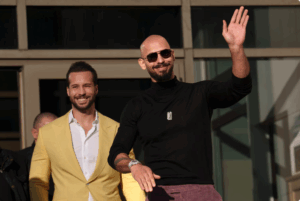
Andrew Tate’s brother, Tristan Tate, is also an American-British internet personality and former professional kickboxer, known for his entrepreneurial ventures, social media presence, and reality TV appearances. The Tate brothers have built their public image together through kickboxing, online influence, business ventures, and have also jointly faced several legal investigations in countries like Romania and Britain.
He went to Halyard High School and then Luton Sixth Form College. From the outside, he looked like any normal kid in the UK school, friends, home. But inside, he was dealing with a lot: the impact of the divorce, constant financial stress, and that nagging feeling that life was tough and unfair. He’s mentioned feeling like he didn’t fully fit in and knowing his family was struggling more than others.
Everything started to change when he found martial arts and kickboxing in his early twenties. What began as training turned into an obsession and then a way out. He took all the frustration, insecurity, and pressure he felt growing up and poured it into the gym and the ring. That decision to bet on himself, to chase kickboxing seriously and later move into business and entrepreneurship slowly pulled him away from a “normal” life path and onto the one the world now knows him for.
His journey is a reminder that:
| Year / Period | Humanised Estimated Net Worth Story | What Was Really Happening in His Life & Career |
|---|---|---|
| 2005–2010 (Early Phase) | Around ₹10–50 lakh – more passion than profit | Just starting out in kickboxing, struggling through early fights, slowly winning national and international titles, learning the grind. |
| 2011–2015 | Around ₹1–5 crore – finally seeing real money from his talent | Major championship wins (including ISKA World titles), growing name in martial arts, better fight purses and recognition. |
| 2016–2019 | Around ₹10–50 crore – shift from “fighter” to “business-minded” | Transition from ring to entrepreneurship, building webcam business, launching first online courses and content, testing online income. |
| 2020–2023 | Around ₹100–370 crore – the “viral Andrew Tate” money phase | Huge growth in digital courses like Hustler’s University, big bets on crypto and real estate, explosive social media reach worldwide. |
| 2024–2025 (Recent Period) | Around ₹100–₹590 crore – highly debated, depending on who you ask | Multiple businesses, online brand, investments and influencer deals, with ongoing legal challenges affecting perception and valuation. |
Andrew Tate earned money through fight purses during his professional kickboxing career. He made around $2 million (₹15–16 crore total) from 80 fights, with payments per match varying between $50,000 to $100,000. Although this was his initial income source, it now serves as a base rather than an active stream.
He partners with brands largely from fitness, lifestyle, tech, and crypto sectors. Companies pay him for sponsored posts, promotional content, and endorsements because of his wide influence and large social media reach, especially in younger demographics.
His main business ventures include Hustler’s University (an online course platform with 220,000+ members), a webcam modeling agency, real estate holdings, and a cryptocurrency project named The Real World (TRW). These companies generate most of his income via subscription fees, equity stakes, and profit-sharing models.
Andrew Tate invests extensively in cryptocurrencies, stocks, and real estate, earning through appreciation, dividends, and rental income. Intellectual property from his digital courses also generates royalties and passive income through memberships.
He occasionally earns from paid appearances, motivational talks, podcasts, and branded events. Though not a major source, these add to his diversified income.
Besides Hustler’s University, he makes significant money from subscription models like The War Room, exclusive content platforms, mentorship programs, and social media ad revenue leveraging millions of followers across YouTube, and Instagram.
Andrew Tate doesn’t rely on just one paycheck. He built a system where content, brand, business, and investments all support each other that’s the real reason his net worth keeps growing steadily year after year.
| Business Name | Type | Role | Estimated Value (₹) |
|---|---|---|---|
| Hustler’s University | Online Education Platform | Founder | ₹800–1500 crore |
| The War Room | Subscription-based Community | Founder | ₹50–100 crore |
| Webcam Business | Adult Entertainment Agency | Owner | ₹100–300 crore |
| Real Estate Holdings | Property Investments | Investor | ₹150–400 crore |
| The Real World (TRW) | Cryptocurrency Project | Co-founder | ₹100–250 crore |
Source:
Andrew Tate has a massive presence on X (Twitter), with over 1.1 crore (11 million+) followers, making it his primary platform for sharing views and promoting his brand, especially now that he is not active on most other major social media platforms.
A: Andrew Tate is a British-American former kickboxer, online businessman, and social media personality.
A: He was born on December 1, 1986, so he is 38 years old in 2025.
A: He was born in Washington, D.C., USA, and later lived in the UK and Romania.
A: His father was Emory Tate, an international chess master; his mother reportedly worked in catering.
A: Yes, he has a brother, Tristan Tate, and a sister, Janine.
A: He has not publicly confirmed being married; he keeps his relationships private.
A: He is accused of promoting misogynistic views, and he has faced serious legal charges in Romania related to human trafficking and other offenses (which he denies).
A: Yes, several platforms temporarily banned or restricted his accounts for violating their policies.
A: Estimates vary widely, from around $10–20 million to claims of hundreds of millions; exact figures are not verified.
A: Mainly through online courses, subscription communities, brand/IP income, investments, and past businesses like casinos and webcam studios.
Andrew Tate’s net worth in 2025 is estimated to be around ₹350–₹420 crore, but this number is only the surface of a much bigger story. Long before he became a viral social media personality, Tate was known as a professional kickboxing champion and a reality TV contestant, slowly building his personal brand through sport and screen.
Over time, he shifted from being just an athlete to becoming a polarizing digital entrepreneur, using his bold opinions, podcast appearances and viral reels to attract massive attention online. Instead of depending only on prize money or brand deals, he tapped into online businesses, digital courses, subscription-based communities and social media monetisation, turning controversy and attention into cash flow. That’s why when people search “Andrew Tate net worth in 2025” or “How rich is Andrew Tate now?”, they’re not just looking for the ₹350–₹420 crore figure, they’re trying to understand how he built this wealth, what drives his online empire, and how a former kickboxer became one of the most talked-about figures in the world of money, masculinity and digital entrepreneurship.
Here is the net worth overview table for Andrew Tate in 2025:
| Particulars | Details |
|---|---|
| Full Name | Emory Andrew Tate III |
| Profession | Kickboxer · Entrepreneur · Social media personality |
| Net Worth (2025) | ₹100–₹590 crore (approx. $12 million to $710 million) |
| Monthly Income | ₹4–₹60 crore (estimated, varies by source) |
| Primary Income Sources | Business ventures (online courses, webcam business), investments (real estate, cryptocurrency), social media earnings |
| Nationality | American-British |
| Active Since | 2005 (kickboxing career), then entrepreneurship since around 2015 |
Source:
Andrew Tate, full name Emory Andrew Tate III, was born on 1 December 1986 in Washington, D.C., USA but he didn’t grow up living some glamorous American dream. After his parents divorced in 1997, he moved with his mum to Luton, Bedfordshire, England, and that’s where most of his real childhood memories were made.
His dad, Emory Tate, was a brilliant International Chess Master the kind of person who could see ten moves ahead on a board. His mum, Eileen Tate, worked in catering, doing regular, hard, everyday jobs to keep the family going. They weren’t rich. In fact, Andrew and his brother have openly talked about how money was tight, how they sometimes saved leftover food because they didn’t know what tomorrow would look like.
Andrew Tate’s brother, Tristan Tate, is also an American-British internet personality and former professional kickboxer, known for his entrepreneurial ventures, social media presence, and reality TV appearances. The Tate brothers have built their public image together through kickboxing, online influence, business ventures, and have also jointly faced several legal investigations in countries like Romania and Britain.
He went to Halyard High School and then Luton Sixth Form College. From the outside, he looked like any normal kid in the UK school, friends, home. But inside, he was dealing with a lot: the impact of the divorce, constant financial stress, and that nagging feeling that life was tough and unfair. He’s mentioned feeling like he didn’t fully fit in and knowing his family was struggling more than others.
Everything started to change when he found martial arts and kickboxing in his early twenties. What began as training turned into an obsession and then a way out. He took all the frustration, insecurity, and pressure he felt growing up and poured it into the gym and the ring. That decision to bet on himself, to chase kickboxing seriously and later move into business and entrepreneurship slowly pulled him away from a “normal” life path and onto the one the world now knows him for.
His journey is a reminder that:
| Year / Period | Humanised Estimated Net Worth Story | What Was Really Happening in His Life & Career |
|---|---|---|
| 2005–2010 (Early Phase) | Around ₹10–50 lakh – more passion than profit | Just starting out in kickboxing, struggling through early fights, slowly winning national and international titles, learning the grind. |
| 2011–2015 | Around ₹1–5 crore – finally seeing real money from his talent | Major championship wins (including ISKA World titles), growing name in martial arts, better fight purses and recognition. |
| 2016–2019 | Around ₹10–50 crore – shift from “fighter” to “business-minded” | Transition from ring to entrepreneurship, building webcam business, launching first online courses and content, testing online income. |
| 2020–2023 | Around ₹100–370 crore – the “viral Andrew Tate” money phase | Huge growth in digital courses like Hustler’s University, big bets on crypto and real estate, explosive social media reach worldwide. |
| 2024–2025 (Recent Period) | Around ₹100–₹590 crore – highly debated, depending on who you ask | Multiple businesses, online brand, investments and influencer deals, with ongoing legal challenges affecting perception and valuation. |
Andrew Tate earned money through fight purses during his professional kickboxing career. He made around $2 million (₹15–16 crore total) from 80 fights, with payments per match varying between $50,000 to $100,000. Although this was his initial income source, it now serves as a base rather than an active stream.
He partners with brands largely from fitness, lifestyle, tech, and crypto sectors. Companies pay him for sponsored posts, promotional content, and endorsements because of his wide influence and large social media reach, especially in younger demographics.
His main business ventures include Hustler’s University (an online course platform with 220,000+ members), a webcam modeling agency, real estate holdings, and a cryptocurrency project named The Real World (TRW). These companies generate most of his income via subscription fees, equity stakes, and profit-sharing models.
Andrew Tate invests extensively in cryptocurrencies, stocks, and real estate, earning through appreciation, dividends, and rental income. Intellectual property from his digital courses also generates royalties and passive income through memberships.
He occasionally earns from paid appearances, motivational talks, podcasts, and branded events. Though not a major source, these add to his diversified income.
Besides Hustler’s University, he makes significant money from subscription models like The War Room, exclusive content platforms, mentorship programs, and social media ad revenue leveraging millions of followers across YouTube, and Instagram.
Andrew Tate doesn’t rely on just one paycheck. He built a system where content, brand, business, and investments all support each other that’s the real reason his net worth keeps growing steadily year after year.
| Business Name | Type | Role | Estimated Value (₹) |
|---|---|---|---|
| Hustler’s University | Online Education Platform | Founder | ₹800–1500 crore |
| The War Room | Subscription-based Community | Founder | ₹50–100 crore |
| Webcam Business | Adult Entertainment Agency | Owner | ₹100–300 crore |
| Real Estate Holdings | Property Investments | Investor | ₹150–400 crore |
| The Real World (TRW) | Cryptocurrency Project | Co-founder | ₹100–250 crore |
Source:
Andrew Tate has a massive presence on X (Twitter), with over 1.1 crore (11 million+) followers, making it his primary platform for sharing views and promoting his brand, especially now that he is not active on most other major social media platforms.
A: Andrew Tate is a British-American former kickboxer, online businessman, and social media personality.
A: He was born on December 1, 1986, so he is 38 years old in 2025.
A: He was born in Washington, D.C., USA, and later lived in the UK and Romania.
A: His father was Emory Tate, an international chess master; his mother reportedly worked in catering.
A: Yes, he has a brother, Tristan Tate, and a sister, Janine.
A: He has not publicly confirmed being married; he keeps his relationships private.
A: He is accused of promoting misogynistic views, and he has faced serious legal charges in Romania related to human trafficking and other offenses (which he denies).
A: Yes, several platforms temporarily banned or restricted his accounts for violating their policies.
A: Estimates vary widely, from around $10–20 million to claims of hundreds of millions; exact figures are not verified.
A: Mainly through online courses, subscription communities, brand/IP income, investments, and past businesses like casinos and webcam studios.
A contributor to the Finanjo blog, where I share insightful and easy-to-understand content focused on educating readers about finance. With a clear and approachable writing style, I simplify complex topics to make them more understandable.
A contributor to the Finanjo blog, where I share insightful and easy-to-understand content focused on educating readers about finance. With a clear and approachable writing style, I simplify complex topics to make them more understandable.

